A complete, honest guide to the UFE procedure — what it is, who it's right for, what to expect before and after, and what results to look forward to. Written in plain language, for real women.
Uterine Fibroid Embolization (UFE) is a minimally invasive procedure that shrinks uterine fibroids by blocking the blood vessels that feed them. Without a blood supply, fibroids gradually shrink and die — relieving your symptoms without surgery.
The procedure is performed by a specially trained doctor called an interventional radiologist (a physician who uses imaging technology to perform precise, targeted treatments). It does not require general anesthesia, large incisions, or removal of the uterus.
UFE has been performed since the 1990s and is now one of the most well-researched, evidence-backed treatments for uterine fibroids available. It is FDA-cleared and covered by most major insurance plans.
UFE is a powerful option for women who have symptomatic uterine fibroids and want to avoid major surgery or preserve their uterus. Here's how UFE directly addresses your symptoms.
UFE dramatically reduces heavy menstrual bleeding in most women. Over 85% report lighter, shorter, more manageable periods within 3 months.
As fibroids shrink, the pressure and pain they cause on surrounding organs and nerves diminishes significantly.
By stopping heavy bleeding, UFE allows your body to rebuild iron stores and recover from anemia — often improving energy levels dramatically.
As subserosal and intramural fibroids shrink, bladder and bowel pressure symptoms typically resolve over 3–6 months.
Fibroids can shrink by 40–70% in volume after UFE, significantly reducing visible abdominal distension.
Studies show significant improvement in overall quality of life, sexual function, work productivity, and emotional well-being after UFE.
UFE is an excellent option for most pre-menopausal women who have symptomatic uterine fibroids and a uterus. You may be a great UFE candidate if you:
UFE may not be recommended if you:
Good preparation helps ensure your procedure goes smoothly and your recovery is as comfortable as possible. Here's a simple checklist of what to expect and do before UFE.
The procedure typically takes 60–90 minutes. Here's exactly what happens, from arrival to recovery room — so nothing will surprise you.
You'll arrive at the hospital or outpatient center and be taken to a pre-procedure area. A nurse will place an IV line in your arm, take your vital signs, and confirm your consent. You'll have a chance to ask any last-minute questions.
UFE is performed under moderate sedation (also called "twilight sedation") and local anesthetic at the catheter insertion site. You will be drowsy and relaxed but typically breathing on your own. You will not remember most of the procedure. General anesthesia — with its additional risks — is not required for UFE.
The interventional radiologist makes a tiny puncture (smaller than a pencil eraser) in your wrist (radial artery) or groin (femoral artery). A thin, flexible tube called a catheter is inserted through this puncture into the artery. No incisions are made.
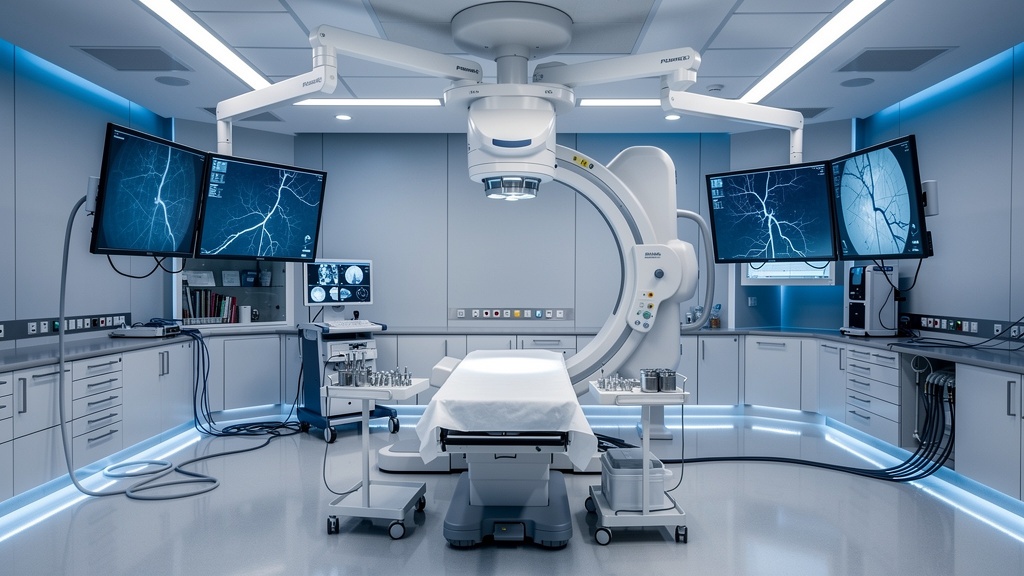
Using real-time X-ray imaging called fluoroscopy, the doctor guides the catheter through your blood vessels to the uterine arteries — the blood vessels that supply your fibroids. A contrast dye (similar to a dye used in CT scans) is injected to help visualize the arteries clearly. This may cause a warm feeling, which is completely normal.
Tiny, sand-grain-sized particles made of polyvinyl alcohol or calibrated microspheres are injected through the catheter into the uterine arteries. These particles permanently block blood flow to the fibroids. The normal uterine tissue is largely spared because it has many alternate blood supply pathways — fibroids depend heavily on the uterine arteries and cannot survive without them.
The doctor injects contrast dye again to confirm that blood flow to the fibroids has been blocked. The catheter is gently removed and a small bandage (no sutures needed) is placed at the puncture site. The procedure is complete.
You'll be monitored in the recovery area as the sedation wears off. Pain management medications (anti-inflammatory drugs, anti-nausea medication) will be administered. Most patients feel significant pelvic cramping for the first several hours — similar to severe menstrual cramps — which is completely expected and effectively managed with medication.
UFE recovery is real — we'll be honest with you. The first few days involve discomfort. But it is manageable, temporary, and far shorter than surgical recovery. Here's exactly what to expect.
You may experience moderate to severe pelvic cramping, low-grade fever, nausea, and fatigue. These are signs that your body is responding to the embolization — it's working. Pain is managed with prescription pain medications. Most patients are discharged within 24 hours and rest at home.
Cramping gradually improves. You'll switch to over-the-counter pain relievers (ibuprofen). Light activities are possible. Rest is still recommended. Most women who work at desk jobs can begin working from home by day 5–7. Vaginal discharge (dark or watery) is common and normal as fibroids begin to break down.
Most women feel well enough to return to work (including physical jobs), exercise, and normal activities by the end of week 2. Sexual activity is typically resumed at 4 weeks or when comfortable. Menstrual periods resume, usually lighter.
This is when most women notice the dramatic improvements they've been waiting for. Fibroids shrink 40–70% in volume. Heavy bleeding becomes significantly lighter or stops entirely. Pelvic pressure, urinary frequency, and bloating resolve as fibroids shrink. Energy levels recover as anemia improves.
Review recovery progress, address any concerns
Evaluate fibroid shrinkage and symptom improvement
Continued monitoring for long-term results
We believe in giving you the complete picture. UFE is very safe, but like any medical procedure, it carries some risks. Here's what you need to know.
Most studies show that UFE does not significantly impair fertility, and many women have conceived after UFE. However, UFE is generally not recommended as a primary fertility treatment, as myomectomy (surgical fibroid removal) may be preferable for women whose primary goal is pregnancy.
If fertility preservation is important to you, this is a critical topic to discuss openly with our specialist before making any treatment decision. We will help you weigh all your options honestly.
Of women experience significant or complete symptom relief
Report significantly lighter or normal periods within 3 months
Average fibroid volume reduction within 6–12 months
Would recommend UFE to a friend or family member